

Employee Recognition Programs: 10 Proven Formats
Most companies recognize employees in some way. The problem is that many employee recognition programs use the wrong format for the team, the culture, or the moment.
Recognition works best when it feels specific, fair, timely, and useful. A public shoutout can energize one team and embarrass another. A gift card can feel practical in one workforce and impersonal in another. The question is not whether recognition matters. It is which format will actually help your people feel seen.
Research from Workhuman and Gallup found that employees who received high-quality recognition in 2022 were 45% less likely to have left their job by 2024. For HR leaders, that makes recognition more than a nice cultural gesture. It is a practical retention strategy.
Below are 10 proven employee recognition program formats, when to use each one, when to avoid it, and how to choose the right mix for your team.
What Is an Employee Recognition Program?
An employee recognition program is a structured way to acknowledge people for contributions, milestones, behaviors, or results that matter to the organization.
Formal recognition programs usually have defined criteria, a budget, a platform, and a repeatable process. Examples include recognition programs, service awards, performance rewards, peer nominations, and values-based awards. Informal recognition is more day to day. It may be a thank-you note, a Slack message, a manager callout, or a private conversation after a hard project.
Recognition vs. Rewards
Recognition is the act of acknowledging someone’s contribution. Rewards are what may come with that recognition, such as a gift, gift card, points, time off, or experience. The best programs connect both without making appreciation feel purely transactional.
Why Employee Recognition Matters
The importance of employee recognition comes down to three practical outcomes: retention, engagement, and performance.
Recognition helps with retention
Employees are more likely to stay when they believe their effort matters and their contributions are noticed by leaders, managers, and peers. Gallup describes recognition as a powerful tool for connecting employees to their organization.
Recognition supports engagement
A thoughtful employee recognition program gives people more reasons to connect with the company’s values, their team, and the work itself. That matters especially for distributed teams, where informal praise does not happen as naturally.
Recognition can reinforce performance
When teams see what gets recognized, they understand what the company values. That can be customer care, collaboration, sales performance, innovation, safety, leadership, or follow-through.
But the wrong format can hurt more than it helps. A program that feels unfair, generic, delayed, or performative can create frustration. The format matters.
Types of Employee Recognition Programs
Format | Best For | Skip If |
Peer-to-peer recognition | Distributed, cross-functional, or remote teams | The culture lacks psychological safety |
Manager-led recognition | Newer teams or teams setting performance norms | Managers are inconsistent recognizers |
Spot bonus / performance recognition | Sales, support, operations, and measurable wins | Work output is hard to attribute |
Service awards / milestone recognition | Companies with longer average tenure | The workforce is mostly contract or short tenure |
Anniversary / birthday recognition | Tight-knit teams that value personal moments | Privacy-sensitive cultures or very large enterprises |
Public / social recognition | Sales floors, agencies, mission-driven teams | Introvert-heavy or research-heavy teams |
Private / informal recognition | Engineering, R&D, senior individual contributors | Recognition needs a written record for advancement |
Monetary rewards / gift cards | Hourly, frontline, retail, hospitality teams | Pay is already below market |
Non-monetary experiences / perks | Salaried teams already paid well | Budget is too limited to deliver well |
Values-based / culture awards | Companies building or rebuilding culture | Stated values feel hollow internally |
Peer-to-Peer Recognition
Peer-to-peer recognition lets employees recognize each other directly. It may happen through a recognition platform, a team channel, a points system, or a weekly kudos ritual.
Use this format when work happens across teams and managers do not see every contribution. It is especially useful for remote, hybrid, and cross-functional teams where collaboration can be easy to miss.
Skip it if the culture is low-trust or cliquey. Peer recognition can amplify what already exists. In a healthy culture, that means more connection. In a strained culture, it can make favoritism feel more visible.
A strong peer-to-peer recognition program should include simple criteria. Encourage employees to recognize specific behaviors, not just popularity. “Thank you for helping me fix the client handoff before the deadline” is stronger than “You’re amazing.”
Manager-Led Recognition
Manager-led recognition comes from a direct manager or department leader. It may happen in 1:1s, team meetings, performance conversations, written notes, or quarterly reviews.
This format works well for newer teams, growing companies, and departments where managers set the tone. It helps employees understand what good work looks like and how their contributions connect to team goals.
Skip it if managers are not prepared to recognize consistently. Uneven recognition can create resentment fast. If one manager celebrates wins weekly and another never does, employees may read the gap as a signal about their value.
The fix is structure. Give managers prompts, examples, and reminders. Recognition should be timely, specific, and connected to a real contribution. A simple manager toolkit can make the program feel more consistent without making it scripted.
Spot Bonuses and Performance Recognition
Spot bonuses are immediate rewards tied to a specific achievement. They may include cash, gift cards, points, extra PTO, or access to a curated gift catalog.
This format works best when wins are clear and measurable. Sales teams, customer support, operations, safety programs, and field teams often benefit from spot recognition because outcomes happen frequently and can be tied to specific actions.
Skip it when attribution is unclear. In complex knowledge work, one person’s “win” may depend on months of invisible effort from others. A poorly designed spot bonus program can reward the most visible employee rather than the full team.
The best performance recognition programs define what qualifies in advance. Examples include closing a strategic deal, saving an at-risk customer, resolving a major support issue, improving a process, or hitting a team milestone. Yesimo supports on-the-spot awards and incentive tracking so program owners can reward timely wins without managing everything manually.
Service Awards and Milestone Recognition
Service awards recognize tenure. Common moments include 1, 5, 10, 15, and 20-year anniversaries, though many companies also recognize earlier milestones to support retention.
Use service awards when your organization has meaningful tenure or wants to build it. They are especially useful in healthcare, manufacturing, hospitality, financial services, and enterprise environments where long-term knowledge matters.
Skip this format if most of your workforce is contract-based or stays less than a year. In that case, service awards may not reach enough people to justify the investment.
A modern work anniversary and employee birthday program should feel more personal than a plaque. Consider recipient-choice gifting, premium gift tiers, branded portals, and manager messages that explain why the milestone matters. The goal is to honor loyalty without forcing every employee into the same gift.
Work Anniversary and Birthday Recognition
Anniversary and birthday recognition celebrates personal or work-related milestones. It can include work anniversaries, birthdays, promotions, new parent moments, or major life events.
This format works well in tight-knit teams where people value personal connection. It can make a workplace feel warmer, especially when the message is thoughtful and the gift is chosen with care.
Skip it in privacy-sensitive cultures or very large organizations where personal celebrations may feel automated. Not every employee wants their birthday announced publicly. Not every life event should become a company moment.
A good rule: let employees set preferences. Ask whether they want public recognition, private recognition, or no recognition for personal milestones. For work anniversaries, keep the message focused on contribution, growth, and appreciation.
“Congratulations on your work anniversary, Jordan. Your calm leadership, follow-through, and care for the team have made a real difference this year. We’re grateful for everything you bring to the work.”
Public and Social Recognition
Public recognition happens in front of others. It may be a shoutout in an all-hands meeting, a company newsletter, a Slack channel, a LinkedIn post, or a leaderboard.
Use this format when public energy helps the culture. Sales teams, agencies, mission-driven organizations, and fast-moving teams often benefit from visible recognition because it builds momentum.
Skip it when your team is introvert-heavy or when public praise feels uncomfortable. Some employees would rather receive a private note than be called out in front of 300 people.
Public recognition should never feel like a popularity contest. Make it specific and inclusive. Rotate categories so the same types of wins are not recognized every time. Celebrate quiet excellence, collaboration, process improvements, customer care, and behind-the-scenes work. For structured programs, employee nominations and badges can help make social recognition more consistent.
Private and Informal Recognition
Private recognition is quiet, direct appreciation. It can be a Slack DM, handwritten card, thoughtful email, voice memo, or thank-you in a 1:1.
This format works well for senior individual contributors, engineering teams, R&D teams, and employees who dislike performative praise. It can also be the best choice after emotionally demanding work.
Skip it when recognition needs to be visible for career growth. If an employee’s contributions should influence promotion, compensation, or leadership visibility, private praise alone is not enough.
The strongest informal recognition is still specific. “Thanks for jumping in” is fine. “Thanks for staying close to the client issue, organizing the next steps, and keeping the team calm under pressure” is better.
Private recognition costs very little, but it requires attention. That is why it works.
Monetary Rewards and Gift Cards
Monetary recognition includes cash, gift cards, points, merchandise, or catalog-based rewards tied to employee appreciation.
Use this format for hourly teams, frontline employees, retail, hospitality, call centers, and any workforce where practical value matters. Gift cards can work especially well because they give recipients flexibility.
Skip it if compensation is already a major pain point. Recognition cannot fix underpayment. If employees feel base pay is unfair, a gift card may feel like a substitute for the real issue.
Monetary recognition works best when paired with a meaningful message. A $100 gift card with no context can feel transactional. A $100 reward tied to a specific contribution feels more human.
For larger organizations, recipient choice matters. A curated catalog, digital gift card options, and reward stores can help employees choose something they actually want while giving the company control over the experience. Yesimo also supports tokens and promo codes for flexible recognition and incentive programs.
Non-Monetary Experiences and Perks
Non-monetary recognition includes experiences, time off, dinners, learning stipends, event tickets, wellness perks, travel, or team celebrations.
Use this format for salaried teams where another small cash reward may not feel meaningful. Experiences can create stronger memories than merchandise when they are well matched to the person or team.
Skip it if the budget cannot support a complete experience. A half-built perk can disappoint people. For example, a “dinner reward” that does not cover the real cost of dinner may create more irritation than appreciation.
This format also works well for high-performing teams after major projects. A team dinner, extra recovery day, or curated experience can acknowledge the intensity of the work without reducing recognition to a transaction.
Give people options when possible. One employee may want a dinner. Another may want a wellness day. Another may prefer a gift card. Deloitte has also written about the value of personalized recognition as part of a stronger workforce experience.
Values-Based and Culture Awards
Values-based recognition ties appreciation to the company’s stated values. Awards may be peer-nominated, manager-nominated, quarterly, or annual.
Use this format when you are building, rebuilding, or reinforcing culture. It works well after mergers, leadership changes, rapid growth, or periods of change where people need clarity about what the company stands for.
Skip it if your stated values do not match the real employee experience. If the company says it values balance but rewards overwork, a culture award will feel cynical.
The key is specificity. Do not simply give someone an “integrity award.” Explain the behavior. Tell the story. Show how the person made the value real.
Values-based awards work best when they include both recognition and a meaningful reward. The award tells the story. The reward makes the moment feel complete.
How to Choose the Best Employee Recognition Program for Your Team
The best employee recognition programs are not the most elaborate. They are the ones that fit the team. Ask yourself these questions when choosing an employee recognition program for your team:
1. How distributed is the team?
Remote or hybrid teams often need peer-to-peer recognition and digital rewards because appreciation does not happen naturally in hallways. In-person teams may benefit more from public recognition, manager-led moments, and team celebrations.
2. How is pay positioned against the market?
If pay is below market, start with practical monetary recognition, but do not pretend it replaces compensation work. If pay is competitive, experiences, service awards, and curated gifts may feel more meaningful.
3. What does your culture punish?
Some cultures punish public vulnerability. Others punish quiet work by overlooking it. Choose formats that correct the gap. If public praise feels performative, use private recognition. If invisible work is being missed, create structured manager-led recognition.
4. What is your tenure curve?
If employees stay for years, service awards can be powerful. If the company is growing quickly or tenure is short, use early milestone recognition, onboarding recognition, and performance-based programs.
For a small startup, start with peer-to-peer and manager-led recognition. For a mid-market services firm, combine values-based awards with spot bonuses. For a large hourly workforce, prioritize monetary rewards, service awards, and simple mobile-friendly access.
How to Start an Employee Recognition Program
- Pick the format that fits. Do not start by choosing software or gifts. Start by choosing the recognition behavior you want to make easier. Peer-to-peer, service awards, spot bonuses, and values-based awards all solve different problems.
- Set a realistic budget. A full recognition program may require a larger annual budget, especially if it includes service awards or performance rewards. Smaller programs can start with peer recognition, manager prompts, and modest gift cards. For planning purposes, review Yesimo pricing or talk with the team about the right structure for your audience.
- Define what gets recognized. Tie recognition to values, milestones, outcomes, or behaviors. Employees should understand what qualifies and why. Clear criteria make the program feel fair.
- Launch it with intention. Do not bury the program in a long HR email. Introduce it in a team meeting or company-wide launch. Explain how it works, who can participate, and what success looks like.
- Measure quarterly. Track participation rate, manager usage, reward redemption, employee feedback, engagement scores, and retention by tenure cohort. A recognition program should feel human, but it still needs reporting.
If your team is also building a broader gifting strategy, Yesimo’s corporate gifting guide is a helpful next read.
Employee Recognition Program Examples
Small startup
A 40-person startup might begin with peer-to-peer recognition in a shared channel and a monthly manager-selected gift card. The goal is to create a habit of appreciation before the culture becomes too busy to notice small wins.
Mid-market services firm
A 600-person company might combine manager-led recognition, values-based awards, and quarterly spot bonuses. This gives leaders a structured way to reinforce client service, collaboration, and follow-through.
Large hourly workforce
A 10,000-person enterprise might use service awards, performance rewards, and digital gift cards through a branded rewards storefront. The priority is scale, fairness, simple access, and fulfillment that does not create more work for managers.
How Yesimo Supports Employee Recognition Programs
Recognition should feel personal to employees and manageable for the team running it. That is where a purpose-built employee recognition gifting platform can help.
Yesimo gives HR and People teams a turnkey way to manage recognition programs, curated gifts, digital gift cards, branded portals, white-labeled experiences, recipient choice, fulfillment, participant support, and reporting in one place.
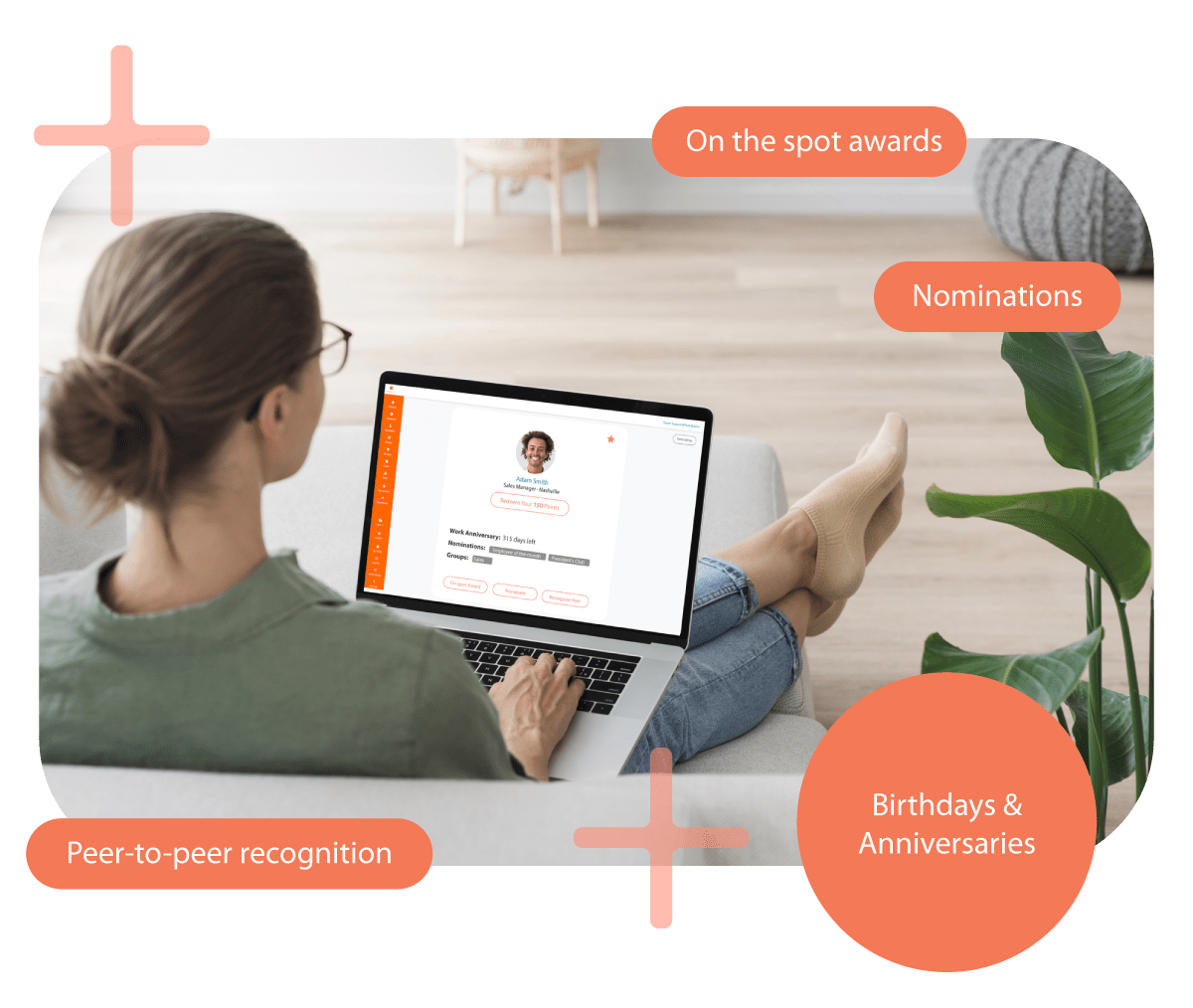
Teams can use Yesimo for work anniversaries, birthdays, peer appreciation, on-the-spot awards, employee nominations, service awards, rewards storefronts, and incentive programs. Explore the Yesimo catalog to see how curated gift options can support different program formats.
For broader enterprise needs, Yesimo also supports corporate gifting solutions, event gifting, and recognition programs for sales teams.
FAQ About Employee Recognition Programs
What is an employee recognition program?
An employee recognition program is a structured way to acknowledge employees for contributions, results, milestones, or behaviors that support the organization. It can include peer recognition, manager praise, service awards, performance rewards, gift cards, or curated gifts.
How much does an employee recognition program cost?
Costs vary by company size, reward value, and program format. A simple peer recognition program may be low cost. A full enterprise program with service awards, gift catalogs, reporting, and fulfillment will require a larger annual budget. View Yesimo pricing.
How do you measure employee recognition?
Measure participation rate, recognition frequency, reward redemption, manager adoption, employee feedback, engagement scores, and retention. For larger teams, review results by department, location, tenure, and employee segment to find gaps.
Do employee recognition programs actually work?
Employee recognition programs work when they are timely, specific, fair, and tied to real contributions. They are less effective when recognition feels generic, delayed, inconsistent, or disconnected from the employee’s actual work.
How does recognition impact employee engagement?
Recognition can improve engagement by helping employees feel seen, valued, and connected to the company’s goals. It also reinforces the behaviors and outcomes the organization wants to encourage.
Make Recognition Easier to Run and Better to Receive
The right recognition format can make appreciation feel more specific, fair, and memorable. The right platform can make it easier to manage at scale.
Yesimo helps companies run employee recognition programs with branded portals, curated gift catalogs, digital gift cards, recipient choice, turnkey fulfillment, support, and reporting in one place.
See how Yesimo runs all 10 recognition formats in one platform.
Have questions before you book? Contact the Yesimo team or learn more about Yesimo.


