

Corporate Gifts: The Complete Guide to Smarter Corporate Gifting
Corporate gifts help companies build stronger relationships with employees, clients, prospects, and event attendees through thoughtful physical gifts, digital gift cards, branded merchandise, and curated experiences. When corporate gifting is done well, it creates a moment people remember. When it is done poorly, it becomes one more forgettable item on a desk, or worse, one more operational headache for your team.
That is why a real corporate gifting strategy matters. You are not only choosing gifts. You are deciding how your brand shows appreciation, how your team handles logistics, and how recipients experience the moment on the other end.
In this guide, you will learn what corporate gifting is, why it matters across HR, sales, marketing, customer success, and events, which corporate gift ideas make sense for different occasions, and how to build a program that actually scales. You will also see how Yesimo helps teams run branded, choice-driven gifting programs without getting buried in sourcing, shipping, spreadsheets, and support requests.
What Is Corporate Gifting?
Corporate gifting is the practice of sending gifts in a business setting to employees, clients, prospects, partners, or event attendees to strengthen relationships and support business goals. Those gifts can include premium products, company-branded merchandise, digital gift cards, or experiences, depending on the audience and the moment.
At a basic level, that definition is simple. In practice, corporate gifting has become much more strategic. A welcome gift can shape a new hire’s first impression. A client gift can reinforce a renewal. A reward tied to an event can keep attendees engaged long after the booth is packed up and the banners come down.
That is also what separates corporate gifts from basic promotional items. Promotional items are broad and brand-led. They are meant to be distributed at scale, often with the same item going to everyone. Corporate gifts are more targeted. They are tied to a person, a milestone, or a specific relationship. The goal is not just visibility. The goal is relevance.
That difference matters for impact. It also matters for budget, logistics, and expectations. A low-cost giveaway can support awareness. A thoughtful client gift or employee appreciation gift can support trust, loyalty, and retention.
Why Corporate Gifting Matters in 2026
Companies have more ways than ever to reach people, and somehow it still feels harder to make a real impression. Email is crowded. Event follow-up gets lost. Generic swag rarely earns more than a polite thank-you. Thoughtful corporate gifts cut through that noise because they feel human.
Marketing teams use corporate gifting to create stronger campaign moments
For marketing teams, gifting can turn a campaign from “another touchpoint” into something more memorable. A pre-event gift can raise attendance for a dinner, webinar, or roadshow. A post-event thank-you can keep your brand in the conversation after the event ends. A curated reward tied to account-based marketing can give a prospect one good reason to engage.
The strongest programs feel intentional. A field marketing team hosting an executive breakfast might send a high-end coffee gift ahead of time. A brand running a customer advisory event might use a post-event reward to keep momentum going. The gift makes sense because the moment makes sense.
Sales teams use client gifts to open doors and keep deals warm
Sales teams have little use for generic outreach. Client gifts and prospect gifts work best when they support a conversation that is already relevant. That could mean a thank-you after a strong discovery call, a congratulations gift after a customer milestone, or a renewal gift that reinforces the relationship.
This is where timing does a lot of the heavy lifting. A thoughtful gift tied to an actual business moment feels sharp. A random item dropped into someone’s week with no context usually feels like noise with packaging.
Client gifts also matter after the deal. Expansion, renewals, executive relationships, and strategic accounts all benefit from moments of appreciation that do not read like a templated follow-up sequence.
HR and people teams use employee appreciation gifts to make recognition real
Recognition falls flat when it feels generic or late. Employee appreciation gifts work best when they are tied to moments people actually care about: onboarding, birthdays, work anniversaries, promotions, peer recognition, service awards, and team wins.
This gets even more important when the workforce is distributed. It is harder to create shared moments when employees are spread across offices, cities, and time zones. Gifts can help close that gap, but only if the program is easy to run. Nobody on the HR team wants to spend the week chasing addresses, tracking deliveries, and resolving vendor issues.
Customer success teams use gifting to support loyalty and retention
Customer success teams sit close to some of the most important moments in the customer relationship: renewals, milestone check-ins, launches, advocacy programs, and recovery moments. A well-timed gift can support those touchpoints in a way that feels more personal than another email and more memorable than a standard account touch.
That does not mean overdoing it. It means choosing moments where appreciation or recognition strengthens the relationship and supports the customer experience.
Event teams use gifting to extend the experience
Event gifting has changed. Attendees are less interested in hauling a bag of random giveaways through an airport. They are more likely to remember a branded experience that feels curated, useful, and easy to redeem.
That opens up better options for planners. You can use gifting before an event to drive registration, during the event to reward engagement, and after the event to create follow-up opportunities. A polished gifting experience can do a lot more than fill a swag table.
Types of Corporate Gifts
The phrase corporate gifts covers a huge range of formats. That can be a strength, but it can also make planning harder. Before you start browsing products, it helps to decide what kind of experience you want to create.
Physical corporate gifts
Physical gifts still carry a lot of weight because they create a tangible moment. They can feel premium, substantial, and memorable when they match the audience and occasion.
Popular options include:
- branded drinkware and apparel
- tech accessories
- desk and home office upgrades
- gourmet food gifts
- curated gift boxes
- premium wellness products
- travel gear
- executive gifts for VIP relationships
Physical gifts are often the right fit for milestones, recognition, premium client outreach, and occasions where presentation matters.
Digital gift cards and virtual rewards
Digital gifting solves a different problem. It moves faster, works well for remote recipients, and avoids some of the shipping friction that slows down large programs. It is a smart option for distributed teams, global campaigns, and moments where timing matters.
Common digital reward options include:
- corporate gift cards
- virtual gift cards
- food delivery credits
- rideshare credits
- streaming subscriptions
- wellness memberships
- online learning credits
- event or entertainment vouchers
Digital rewards are also useful when you want the experience to feel immediate. A same-day thank-you can matter more than a package that arrives two weeks later.
Experience-based gifting
Experience gifts tend to stand out because they feel less transactional and more memorable. That might include concert tickets, sports tickets, travel-related rewards, local experiences, or premium dining credits. These can work especially well for executive gifting, customer loyalty, and event-related follow-up.
Recipient-choice gifting
Recipient-choice gifting is where many programs improve fast. Instead of forcing one item on everyone, you let recipients choose from a curated catalog. That solves a very common problem: different people want different things.
Some prefer a premium product. Others want a digital gift card. Some like branded merchandise when it is well done. Others would rather skip it. Choice respects those differences.
It also helps reduce waste. A gift that people choose is far more likely to be redeemed, appreciated, and used. For companies, that means fewer misses and a better overall experience.
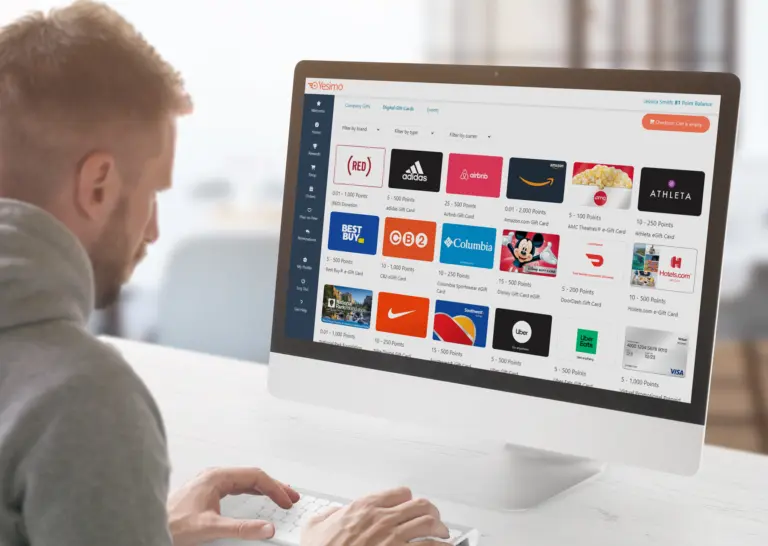
This is one of Yesimo’s clearest differentiators. Our corporate gifting platform is built around branded, curated gifting experiences that give recipients real choice while keeping control in the hands of the sender. That gives teams a cleaner way to protect the brand, manage the catalog, and avoid the usual guessing game.
Corporate Gift Ideas by Occasion
The easiest way to improve your corporate gift ideas is to stop asking, “What should we send?” and start asking, “What moment are we supporting?” The occasion shapes the budget, tone, urgency, and type of gift that makes sense.
Corporate holiday gifts
Corporate holiday gifts are still one of the biggest gifting opportunities of the year, and also one of the easiest to get wrong. When everyone gets the same item, sent at the same time, with the same generic note, the gesture starts to feel flat.
A better holiday strategy gives you room to personalize the experience:
- Holiday gift boxes with premium food, drink, or wellness items
- Branded holiday gifts that feel polished, not overdone
- Digital gift cards for distributed teams
- Recipient-choice holiday stores by budget tier
- Executive gifts for key clients or leadership contacts
Holiday gifting also benefits from simple segmentation. A broad employee campaign may need one budget range. Client retention gifts may need another. VIP relationships may call for a more elevated option.
Employee appreciation gifts
Employee appreciation gifts work best when they reflect a real milestone or achievement. Good employee gift ideas often include:
- onboarding welcome gifts
- birthday rewards
- work anniversaries and birthdays
- promotion gifts
- service awards
- peer-to-peer appreciation
- team performance rewards
- Employee Appreciation Day gifts
The key is matching the gift to the moment. A one-year anniversary and a ten-year service award should not feel identical. A welcome gift for a new hire should feel different from a peer recognition reward. The strongest programs make those distinctions naturally.
Client gifts and customer gifts
Client gifts deserve a more careful touch. The best client gift ideas feel polished and appropriate to the relationship. They work best around clear business moments:
- contract renewals
- successful launches
- expansion milestones
- customer appreciation campaigns
- executive meetings
- referral thank-yous
- win-back efforts
Strong gifts for clients often include premium gift boxes, lifestyle products, digital rewards, or curated choice-based experiences that let the recipient pick what fits them best.
Event and conference gifts
Event gifting is a category where companies still leave a lot on the table. Good event gift ideas include:
- pre-event registration rewards
- VIP attendee gifts
- speaker thank-you gifts
- raffle and giveaway rewards
- booth engagement incentives
- post-event follow-up gifts
- branded redemption experiences
- corporate event gifts
- ship-to-home options for attendees
This is also where choice becomes especially useful. If attendees do not want to carry products around all day, or pack them into a suitcase later, a curated redemption experience feels far more practical.
Executive gifts and luxury corporate gifts
Luxury corporate gifts are best reserved for moments where the relationship and budget support them. Executive gifting works well for board members, top clients, leadership milestones, and premium incentive programs.
The strongest executive gifts do not try too hard. They feel refined, useful, and well-presented. A premium gift can say a lot. So can a clumsy one.
How to Build a Corporate Gifting Strategy
A good gifting program is not just a list of products. It is a system. That system should make it easier to deliver a good experience for recipients and easier for your team to run the program behind the scenes.
1. Define the goal first
Every gifting program needs a clear job to do. Start by deciding what you want the program to support:
- recognition programs
- client retention
- prospect engagement
- event attendance
- customer loyalty
- incentive tracking
When the goal is clear, the rest gets easier. The gift type, budget, message, and measurement all start to line up.
2. Segment your audience
A new hire, a long-term client, an event attendee, and a sales incentive winner should not all get the same gifting experience. Segment your audience by relationship, importance, geography, and use case before you start selecting gifts.
This is also where you need to think practically. Are you shipping internationally? Do you need address collection? Are there company gift policies to consider? Are some groups better suited for digital rewards? Small decisions here save a lot of friction later.
3. Build budget tiers
Corporate gifting budgets work better when they are tied to occasions and audiences, not one blanket number.
A practical framework might look like this:
- lower-budget gifts for broad employee appreciation campaigns
- mid-range gifts for client thank-yous and milestone rewards
- premium tiers for executives, incentive winners, or strategic accounts
Do not forget the hidden costs, either. Packaging, branding, support, shipping, and internal coordination all affect the true cost of a gifting program.
4. Choose the right gift format
Physical gifts, digital rewards, experiences, and recipient-choice programs all solve different problems. Think about the recipient first.
If you need polish and presence, physical gifts may be right. If you need speed and scale, digital rewards may be better. If preferences vary a lot, recipient-choice usually wins.
5. Decide how branded the experience should feel
There is a difference between a gift that feels branded and a gift that feels like an ad. Some occasions benefit from a clear brand presence. Others land better with a softer touch.
That is why rewards storefronts and curated portals can work so well. The brand still shows up in the experience, but the gift itself does not have to carry the entire burden of that branding.
6. Plan the logistics early
This is where many teams get tripped up. Even a strong gifting idea can fall apart if the logistics are messy.
Think through:
- sourcing
- inventory
- shipping
- address collection
- recipient communication
- customer support
- delivery timelines
- reporting
If your team is already juggling a full workload, this is where a corporate gifting platform becomes less of a nice-to-have and more of a necessity.
7. Measure the results
A gifting program should be able to earn its keep. That means tracking what matters.
Depending on the use case, you might measure:
- redemption rates
- meeting conversion
- event attendance
- employee participation
- customer engagement
- renewal-related touchpoints
- program usage by team or campaign
You do not need a perfect model for every gift sent. You do need enough visibility to learn what is working and improve from there.
Corporate Gifting Best Practices
The basics matter more than people think. A polished gifting program usually gets the details right.
Personalize the message, not just the label
Using someone’s name is fine. Referencing a real milestone, relationship, or context is better. A thoughtful message does more work than a louder logo.
Give people choice when preferences vary
If your audience is broad, recipient-choice gifting usually leads to a better experience. It removes guesswork and lowers the risk of sending something that misses.
Match the gift to the moment
An onboarding gift should feel different from a renewal gift. A holiday campaign should feel different from a sales incentive reward. Context drives relevance.
Keep branding tasteful
Branded merchandise can work very well. Branded everything rarely does. People can tell the difference between a gift and a promotional push.
Time the gift well
Timing changes how the gift is perceived. A thank-you that arrives quickly feels attentive. A holiday gift that lands after the season feels rushed. The moment matters.
Make it easy on your team
A gifting program should not create more friction than it removes. If the process relies on too many manual steps, it will be hard to sustain.
Common Corporate Gifting Mistakes
Most bad gifting programs do not fail because the gift itself is terrible. They fail because the process behind the gift is clunky or the strategy is too generic.
Sending the same thing to everyone
This is the fastest way to lower relevance. A broad audience almost always has different preferences, price expectations, and delivery realities.
Treating gifting like a holiday-only tactic
Holiday gifting matters, but it should not be the only time your company shows appreciation. Some of the best gifting moments happen mid-year, after milestones, or around events and launches.
Over-branding every item
Brand visibility matters. So does restraint. If the whole experience feels like self-promotion, the gift loses warmth.
Forgetting the back-end experience
Recipients see the front end. Your team feels the back end. If sourcing, shipping, support, and reporting are a mess, the program gets expensive in quieter ways.
Ignoring policy and compliance realities
Some companies have gift rules. Some industries have tighter restrictions. International shipping adds another layer. Thinking about these factors early prevents awkward fixes later.
Are Corporate Gifts Tax Deductible?
In the U.S., some business gifts may be deductible, but the rules are narrower than many teams expect. The IRS generally limits the business gift deduction to $25 per recipient per year, and gift cards given to employees are typically treated as taxable compensation. Review the details with your tax advisor before you publish internal gifting rules or launch a large program.
Why Yesimo Is a Strong Fit for Corporate Gifting
Yesimo’s strongest advantage is that it gives companies a way to run polished gifting programs without turning the process into an internal project that never ends.
The platform is built for branded, curated gifting experiences with real recipient choice. That matters because the usual pain points are predictable: too many vendors, too much shipping coordination, too many gifts that miss the mark, and too little visibility into what was actually redeemed or appreciated.
Yesimo gives teams a more controlled way to manage that. You can curate the catalog, shape the branded experience, and give recipients room to choose what they actually want. That balance is important. It protects the brand while making the experience feel more personal.
It also helps that Yesimo is positioned for multiple teams, not one narrow use case. HR teams can use it for employee recognition and milestones. Sales teams can use it for client gifts, prospecting, and sales incentive programs. Event teams can use it for attendee engagement and follow-up. Marketing teams can use it for campaign gifting and branded experiences tied to real programs, not one-off sends.
Where this really stands out is operational ease. Yesimo is built around the idea that gifting should feel high-touch to the recipient without becoming high-friction for your internal team. That is a strong place to be.
Frequently Asked Questions About Corporate Gifting
What is corporate gifting?
Corporate gifting is the practice of sending gifts in a business setting to employees, clients, prospects, partners, or event attendees to strengthen relationships and support goals like recognition, loyalty, engagement, or retention.
Why is corporate gifting important?
Corporate gifting creates moments of appreciation that feel more personal than standard outreach. It helps companies strengthen relationships with employees, clients, and prospects in ways that are memorable and relevant.
What are good corporate gifts for employees?
The best employee gifts are tied to meaningful moments like onboarding, birthdays, promotions, work anniversaries, service awards, and peer recognition. Choice-based rewards often perform especially well because they match different preferences.
What are the best client gifts?
Good client gifts feel polished, useful, and appropriate to the relationship. Premium gift boxes, elevated digital rewards, executive gifts, and recipient-choice experiences are all strong options depending on the context.
How does corporate gifting work?
A corporate gifting program usually starts with a goal, an audience segment, a budget, and a gift format. From there, the company sends gifts directly or uses a platform to manage catalog curation, branding, communication, fulfillment, and reporting.
What is the best corporate gifting platform?
The best platform depends on your needs, but the short list is usually the same: recipient choice, a strong catalog, branded experiences, manageable logistics, and useful reporting. For teams that want a premium, choice-driven approach with operational support, Yesimo is a strong option.
Are corporate holiday gifts still effective?
Yes, when they are thoughtful and well-timed. Holiday gifting still works, but generic gifts sent to everyone in the same way tend to have less impact than curated or choice-based experiences.
Which corporate gifts boost employee morale the most?
Gifts tied to real moments tend to have the strongest effect, especially work anniversaries, promotions, peer recognition, and milestone achievements. A gift feels more meaningful when it reflects the moment and gives the employee something they actually want.
Turn Corporate Gifting Into a Smarter Strategy
The best corporate gifts do more than fill a box. They support real moments, strengthen real relationships, and make people feel seen. That is true whether you are welcoming a new hire, thanking a client, recognizing a top performer, or creating a better event experience.
If you want corporate gifting to feel more personal for recipients and more manageable for your team, Yesimo gives you a smarter place to start. You can also review pricing or request a demo when you are ready to explore the platform in more detail.

